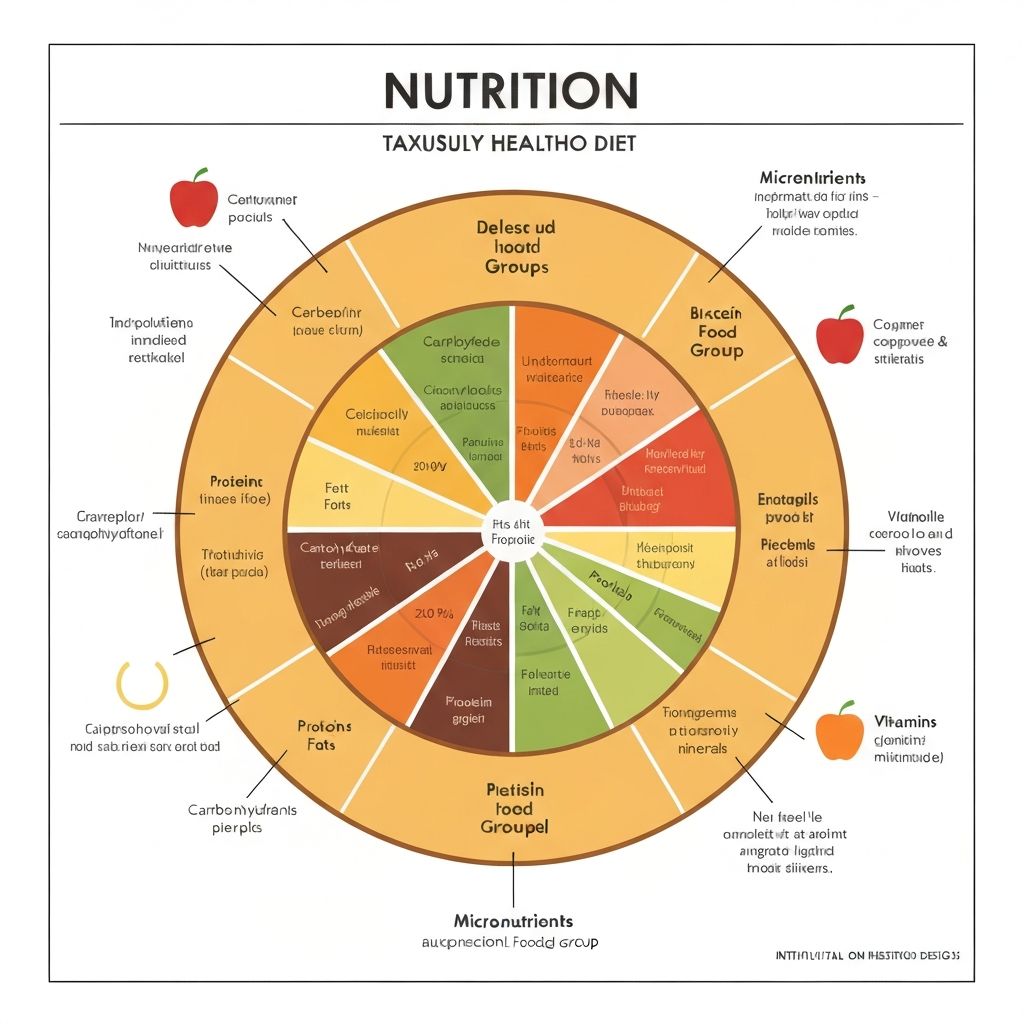
A systematic exploration of nutritional science, from molecular mechanisms to practical application
Nutrition is a scientific discipline that examines how foods and their components affect human health, growth, and disease prevention. This section provides a framework for understanding key nutritional concepts.
Function: Building and repair of tissues, enzyme function, hormone production, immune support.
Composition: Chains of amino acids, of which nine are essential (must be obtained through diet).
Sources: Legumes, nuts, seeds, fish, poultry, eggs, dairy, tofu.
Function: Primary energy source, glucose regulation, digestive health through fiber.
Types: Simple (sugars) and complex (starches and fiber in whole foods).
Sources: Whole grains, legumes, vegetables, fruits, dairy products.
Function: Energy storage, hormone production, nutrient absorption (fat-soluble vitamins A, D, E, K), cell membrane structure.
Types: Saturated, unsaturated (monounsaturated and polyunsaturated), and trans fats.
Sources: Olive oil, nuts, seeds, fatty fish, avocados, coconut oil.
Function: Enzyme cofactors, antioxidant defense, immune support, energy metabolism.
Categories: Fat-soluble (A, D, E, K) and water-soluble (B complex, C).
Sources: Diverse plant and animal foods; variety ensures adequate micronutrient intake.
Function: Bone structure, fluid balance, nerve transmission, muscle function.
Key Minerals: Calcium, iron, zinc, magnesium, potassium, phosphorus, selenium.
Sources: Vegetables, legumes, nuts, seeds, whole grains, seafood, dairy.
Function: Antioxidant and anti-inflammatory properties, disease prevention, cellular health.
Diversity: Thousands of compounds in plants; color indicates different phytonutrient profiles.
Sources: Colorful vegetables, fruits, legumes, whole grains, herbs, spices.
Energy metabolism is the process by which the body converts food into usable energy. Understanding this fundamental concept provides context for nutritional needs.
All macronutrients—carbohydrates, proteins, and fats—are broken down into glucose and other molecules that enter metabolic pathways. Through a series of enzymatic reactions, this energy is captured in the form of ATP (adenosine triphosphate), the cell's energy currency.
Basal Metabolic Rate (BMR): This is the energy required to maintain basic physiological functions at rest—breathing, heart rate, cellular repair. BMR accounts for approximately 60-75% of daily energy expenditure in sedentary individuals.
Bioavailability refers to the proportion of a nutrient that is absorbed and available for use by the body. Various factors influence whether the nutrients in food are utilized effectively.
Nutrients must be chemically broken down to molecular forms small enough for intestinal absorption. Whole foods require greater digestive effort than processed foods.
The intestinal lining selectively absorbs nutrients, with some nutrients requiring specific transport mechanisms or cofactors to be absorbed effectively.
Absorbed nutrients enter the bloodstream or lymphatic system for transport to tissues and cells throughout the body.
Cells take up nutrients through specific receptors and use them for metabolic functions, structural integration, or storage.
Factors Affecting Bioavailability:
Dietary fiber plays diverse roles in human health, from digestive function to metabolic regulation and disease prevention. Its importance has become increasingly recognized in nutritional science.
Soluble Fiber: Dissolves in water, forming a viscous gel. Supports cholesterol management and blood glucose regulation.
Sources: Oats, barley, legumes, apples, berries.
Insoluble Fiber: Does not dissolve in water. Adds bulk to stool and promotes regular digestion.
Sources: Wheat bran, vegetables, whole grains.
Gut Microbiota: The trillions of microorganisms in the digestive system play critical roles in nutrient absorption, immune function, and metabolic health. Dietary fiber serves as food for beneficial bacteria, supporting a healthy microbial ecosystem.
Nutrients rarely function in isolation. Their effectiveness is often enhanced or diminished by other compounds present in food or consumed simultaneously.
Iron Absorption: Vitamin C significantly increases the absorption of non-heme iron from plant sources. Pairing leafy greens with citrus or bell peppers enhances iron bioavailability.
Vitamins A, D, E, K: These vitamins require dietary fat for absorption. Consuming vegetables containing these vitamins with oil or fat-containing foods enhances their availability.
Synergistic Defense: Multiple antioxidants work together to neutralize free radicals. Whole foods containing diverse phytonutrients provide superior antioxidant protection than isolated supplements.
Anti-nutrients: Some compounds in plants inhibit nutrient absorption (e.g., phytates in grains). Soaking, sprouting, or cooking reduces these inhibitors, increasing nutrient availability.
Understanding the biological signals that regulate hunger and fullness provides insight into sustainable eating patterns and body awareness.
Satiety Factors:
Leptin is produced by fat tissue and signals satiety to the brain, reducing appetite and food-seeking behavior. Ghrelin is produced in the stomach and signals hunger, stimulating food intake.
These hormones function in dynamic balance, influenced by meal composition, sleep quality, stress levels, and overall nutritional status.
Nutritional needs vary throughout life in response to growth, hormonal changes, and metabolic shifts. Understanding these variations informs appropriate nutritional strategies.
Rapid growth requires increased energy and nutrients, particularly protein, calcium, iron, and zinc. Establishing healthy eating patterns during these stages supports long-term health.
Nutritional needs stabilize but vary based on physical activity, stress, and reproductive status. Maintaining consistent intake of diverse whole foods supports sustained health and energy.
Energy needs may decrease slightly, but micronutrient requirements for bone health, cognitive function, and immune support remain high or increase. Nutrient-dense foods become particularly important.
These stages require increased energy, protein, iron, calcium, and folate to support fetal development and milk production. Adequate nutrition directly impacts infant health and maternal recovery.
Beyond providing energy, food communicates with our genes through epigenetic mechanisms. The compounds in foods influence gene expression and cellular function.
While genetic code cannot be changed through diet, the expression of genes can be influenced by nutritional and environmental factors. Certain phytonutrients and minerals activate or suppress genetic pathways related to inflammation, detoxification, and cellular repair.
This emerging field suggests that nutritional choices can support health not just through caloric and macronutrient balance, but through more subtle molecular communication with our cells.